
Skip to content

Service · AI Solutions

AI Agent Systems

AI that executes real work — logged and governed.

LLM APIsNode.jsPostgreSQLn8nGoogle Cloud Run
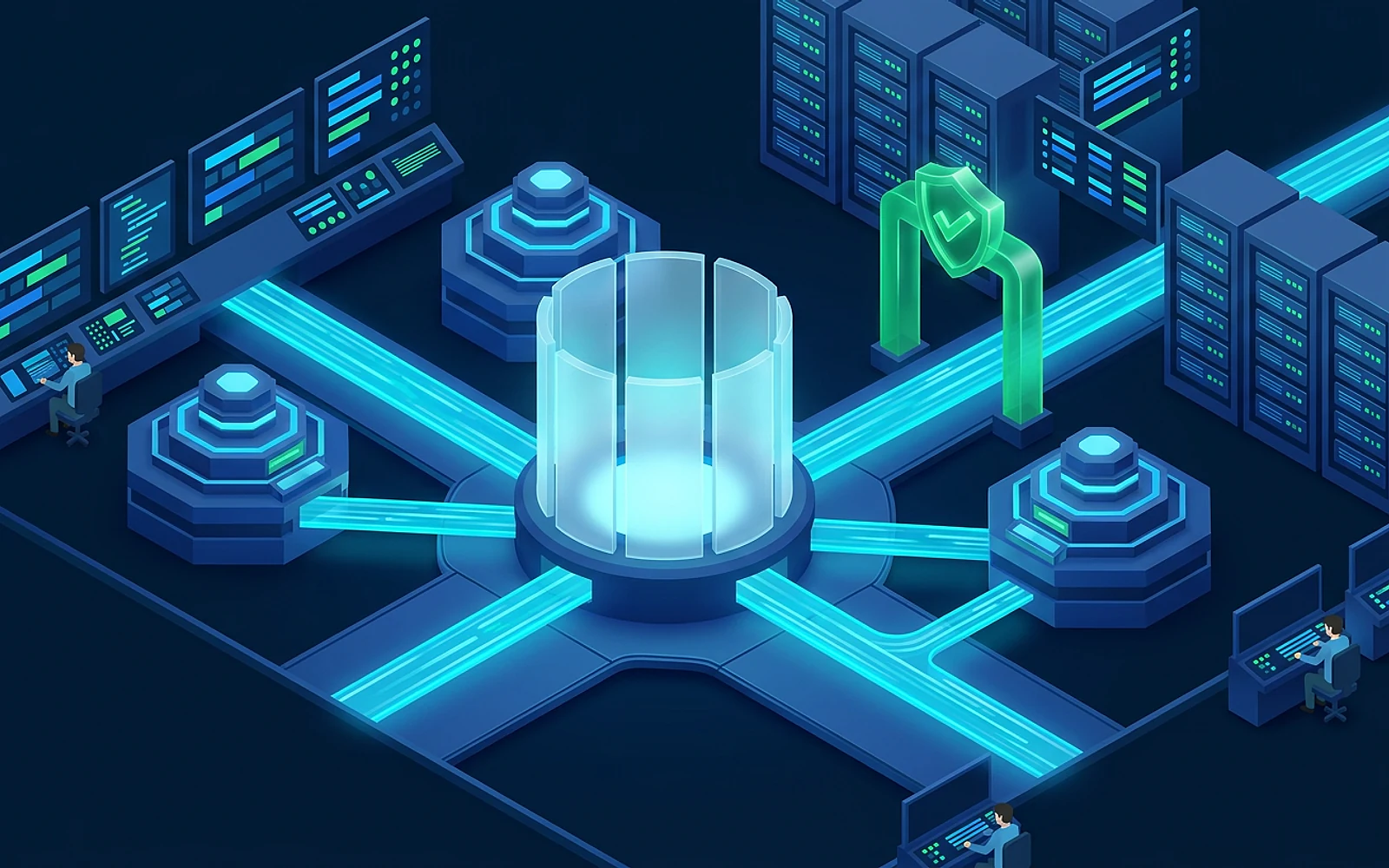
Illustrative enterprise AI operations command center with a central coordinator core, three specialized agent nodes, connected system consoles, and an emerald human-approval gate
Dedicated architecture visualScoped in writing · Client-owned

The Problem We Solve

Why businesses bring us in for ai agent systems

"AI agents" on most dashboards are theater: icons that simulate activity. Real automation requires agents that read and write your actual systems, keep records of every action, and stop for human approval when the action matters.

Who This Is Built For

Organisations that want AI doing bounded, logged work — triage, drafting, lookup, routing — with a named human approving anything that leaves the system.

Our Engineering Approach

How Tech360 structures this solution

We build production agent systems: each agent with a defined job, tool permissions, execution history and approval gates for sensitive actions. Output is stored, auditable and reproducible — a governed automation system for your business.

What’s Included

Capabilities & deliverables

  • Agents with defined roles, tools and permissions
  • Every execution recorded — input, output, duration, errors
  • Human approval gates for sensitive actions
  • Memory and knowledge base per business domain
  • Constitutional rules the agents cannot break
  • Full audit trail queryable by client and date

Execution Sequence

Typical engagement steps

  1. 1Candidate workload analysis — what should be automated
  2. 2Agent role, permission and governance design
  3. 3Preview of agent behaviour in a sandbox
  4. 4Build, integrate with your systems, supervised live-run
  5. 5Approval-gate tuning, documentation and handover

How Delivery Works

From first enquiry to source-code handover in seven clear steps

Every ai agent systems engagement follows our governed client lifecycle so scope, design sign-off, milestones, and ownership are explicit from day one.

  1. STEP 01

    You send an enquiry

    Use the on-site chat or the project form. Tell us the problem, the constraints you already know about, and how you want to be contacted.

    A written acknowledgement and a named contact for your enquiry.

  2. STEP 02

    We confirm the requirement

    A short discovery conversation establishes scope, the systems involved, the people who must approve, and any third-party providers that need access.

    A documented requirement summary you can correct before anything is quoted.

  3. STEP 03

    You receive a written proposal

    The proposal sets out deliverables, price in USD, schedule, revision allowance, payment milestones, support and ownership terms.

    A proposal document with explicit inclusions and exclusions.

  4. STEP 04

    You approve the Scope of Work

    Work begins only against an approved Scope of Work. Discussion, a proposal draft or a verbal agreement does not replace that approval.

    An approved Scope of Work that governs the engagement.

  5. STEP 05

    You review the deliverable

    Where the agreed process includes an HTML preview, you review the visual design and the elements actually shown before the applicable payment step. A preview is a design review, not proof that backend systems are complete.

    A reviewable preview and a dated approval record where one is included.

  6. STEP 06

    Payment is verified and cleared

    Milestones are invoiced as agreed. Payment counts as received only once cleared funds can be verified against transaction records or provider confirmation.

    Invoices, receipts and a verified payment record.

  7. STEP 07

    Delivery and source-code handover

    After all required payments have been received and cleared, and unless the agreement says otherwise, source code and agreed files are handed over with the documentation needed to run the system.

    Delivered system, handover documentation and the agreed source code.

Questions & Answers

Common questions about AI Agent Systems

The service is built to 6 published standards. Which of them apply to you, and to what depth, is written into the approved Scope of Work before work starts — along with the technology decisions (typically LLM APIs, Node.js, PostgreSQL). Anything not named there is out of scope by default.

Next step

Ready to discuss your project?

Send an enquiry to discuss your requirements. We will document the proposed scope, pricing, schedule, and any preview or milestones included in the agreed process.

Start Your Project

Every engagement is on-record: Client ID, written scope, verified payments, full handover.