
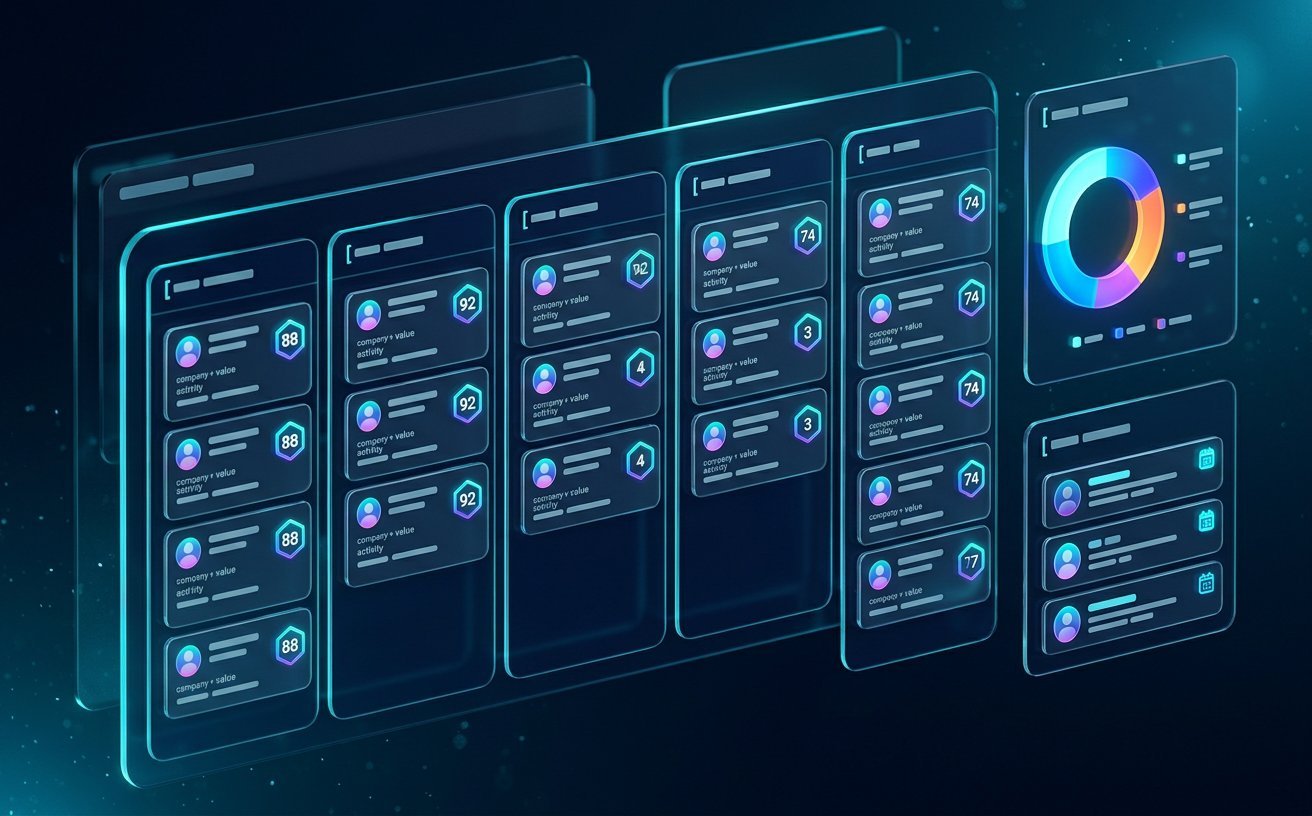
Lead Management
Source tracking, scoring, assignment and follow-up discipline.
- Modules
- 6
- Journey steps
- 4
- Integrations
- 4
- Indicative build
- 4–7 weeks
How to read this page: Concept specification: this page documents a system TECH360 can build. It is not a delivered client project, a verified case study, a working demonstration or a measured outcome.
B · Problem & target users
What this system is designed to replace
- Lead source is guessed rather than captured at entry.
- Assignment is manual and slow, so first contact is delayed.
- Follow-up discipline depends on an individual's habit.
Target users
- Sales agents
- Sales managers
- Marketing
C · Objectives & intended benefits
Design intent, not measured outcomes
- Capture source and consent at the point of entry.
- Assign deterministically by rule, geography or capacity.
- Enforce a follow-up cadence with recorded attempts.
These are goals the build is designed to serve. No efficiency, revenue or conversion result is claimed.
D · Product overview
What the system is, and where it runs
A lead management module for any sales team: capture with source attribution, duplicate-safe Client IDs, scoring, assignment, follow-up scheduling and pipeline reporting.
Pipeline board
Stage view with owner and next action.
Lead record
Source, score, history and consent state.
Manager dashboard
Response time, stage age and source mix.
Platforms listed describe the intended build. A specific engagement may narrow or extend them after scope approval.
E · Module inventory
Modules in the specification
- Multi-source capture (form, chat, call, social)
- UTM, referrer and device attribution
- Scoring and routing rules
- Follow-up scheduling
- Duplicate and identity review queue
- Pipeline and source reporting
Capabilities the system is designed to provide
- Attribute every lead to a source, campaign and landing path
- Issue a non-duplicating Client ID under concurrent submissions
- Schedule the next follow-up with an owner and due date
- Flag identity collisions for human review instead of merging blindly
F · Screen gallery
No verified product screenshots for this concept
This project has not been built, so there are no application screenshots to show. The image on this page is a generated concept visual, not a capture of working software. Presenting it as a product screenshot would misrepresent the system, so this section says so explicitly.
G · User journey
The intended path through the system
Step 1
Capture
A lead enters with source, consent and contact details.
Step 2
Score
Rules or a model produce an advisory score.
Step 3
Assign
Routing assigns an owner with a first-contact deadline.
Step 4
Work
Attempts and stage changes are logged until won or lost.
H · Roles & permissions
Who can do what
| Role | Access boundary |
|---|---|
| Agent | Own leads and their history. |
| Manager | Allocation, reassignment and reporting. |
| Marketing | Source performance; no contact details editing. |
I · Architecture & API
Service boundary and HTTP surface
| Endpoint | Purpose |
|---|---|
| POST /api/leads | Capture with source and consent metadata. |
| POST /api/leads/:id/assign | Deterministic assignment with audit. |
| GET /api/reports/sources | Source performance for permitted roles. |
Endpoints are the intended contract. Authorisation is enforced server-side per role, never only in the interface.
J · Data entities
Core entities and relationships
| Entity | Relationship |
|---|---|
| Lead | Has many attempts; belongs to one owner. |
| Source | Classifies origin and consent basis. |
| Score | Belongs to a lead; carries model or rule version. |
| Attempt | Belongs to a lead; records channel and outcome. |
K · External integrations
Provider-dependent integration points
- Website forms
- Chat widget
- SMS / WhatsApp
- Advertising platform exports
- CRM
Each integration is configured and accepted against the specific provider account before go-live.
L · AI & automation
Opportunities and their human gate
Score leads from historical conversion patterns.
Human gate: Manager can override any score; assignment rules stay deterministic.
Draft first-contact messages.
Human gate: Agent sends; drafts never auto-dispatch.
M · Security, privacy & accessibility
Controls the build is specified to enforce
- Consent basis is stored with every lead and honoured on contact.
- Bulk export is restricted and logged.
- Model scores are explainable and versioned.
Accessibility is treated as an acceptance criterion for keyboard, focus and contrast on every screen. No certification or audit result is implied.
N · Testing & quality assurance
What would have to be proven before handover
- Assignment rule tests including capacity limits.
- Consent enforcement tests.
- Score-version traceability tests.
O · Deployment & hosting
Where and how it would run
- Containerised web app
- Managed database
- Daily export job
P · Maintenance & scalability
Keeping it maintainable
- Routing rules in configuration
- Score model versioned
- Retention per jurisdiction
Q · Optional advanced features
Out of the initial scope, available later
- Round-robin with fairness weighting
- Duplicate detection across sources
- Territory rules
R · Related
Related solutions and next step
Sector blueprint: Professional Services solutions
What this page does not claim: Attribution is first-party only; no ad-platform revenue reconciliation is implied. Scoring models are configured per business, not pre-trained on client data.
Claims policy: this page is checked against a forbidden-claim list (6 patterns, including invented percentage results, “case study” and guarantee language) by the repository test suite.